
Green Energy
You cannot dig your way out of congestion.
Grid capacity now depends on flexible contracts, energy hubs, batteries and smart charging that customers have to choose. Aidrian gives the leaders who own those propositions, and the technology leaders who own the platforms behind them, continuous evidence of what is being adopted, what is stalling, and what to change next.
The challenge for grid operators and energy companies
The challenge
Congestion is national, connection queues run to years, and the copper that would solve it takes a decade to lay. So the transition now runs on propositions customers have to opt into. The shop is stocked. Adoption lags behind it. You know what you launched and what it cost. What you cannot see is which propositions are being taken up, why the others stall, whether the fix you made last quarter moved anything, and how much capacity any of it actually released. Aidrian closes that gap.
Why now
In June 2026 the ACM made binding arrangements with all seven Dutch system operators, finding that the flexible contracts it had made possible were still not sufficiently offered. Operators must widen access, increase congestion management deployment, and improve their insight into grid utilisation, with progress published on a quarterly dashboard. The obligation is no longer to build the proposition. It is to show it reached customers.
Around 1,700 GW of clean energy sits in European connection queues, and roughly EUR 7.2 billion of renewable electricity was curtailed across seven European countries in 2024. Relief that used to come from infrastructure now comes from propositions people have to accept: non-firm connections, time-bound capacity, energy hubs, flexibility. That makes uptake, not delivery, the constraint.
Allowed revenue is regulated, so the transition portfolio cannot simply be funded harder. Every euro of capex and opex is argued in front of a regulator and a board who increasingly reject benefits cases in favour of before-and-after evidence. Most operators cannot yet produce it for the investments they have already made.
.DsRtyFoX_Z1vWd9q.webp)
See which propositions are being adopted, not just which ones shipped
Flex contracts, site contracts, energy hubs, batteries and public charging all launch and then diverge, and a delivery dashboard cannot tell you which is which. Aidrian tracks each proposition against uptake, customer reach and released capacity, pulling signals from beyond the delivery teams: sales, support, field, and the proposition owners who carry the outcome. When adoption stalls, you can see whether the cause sits in the proposition, the onboarding, the pricing or the platform.
Explore use case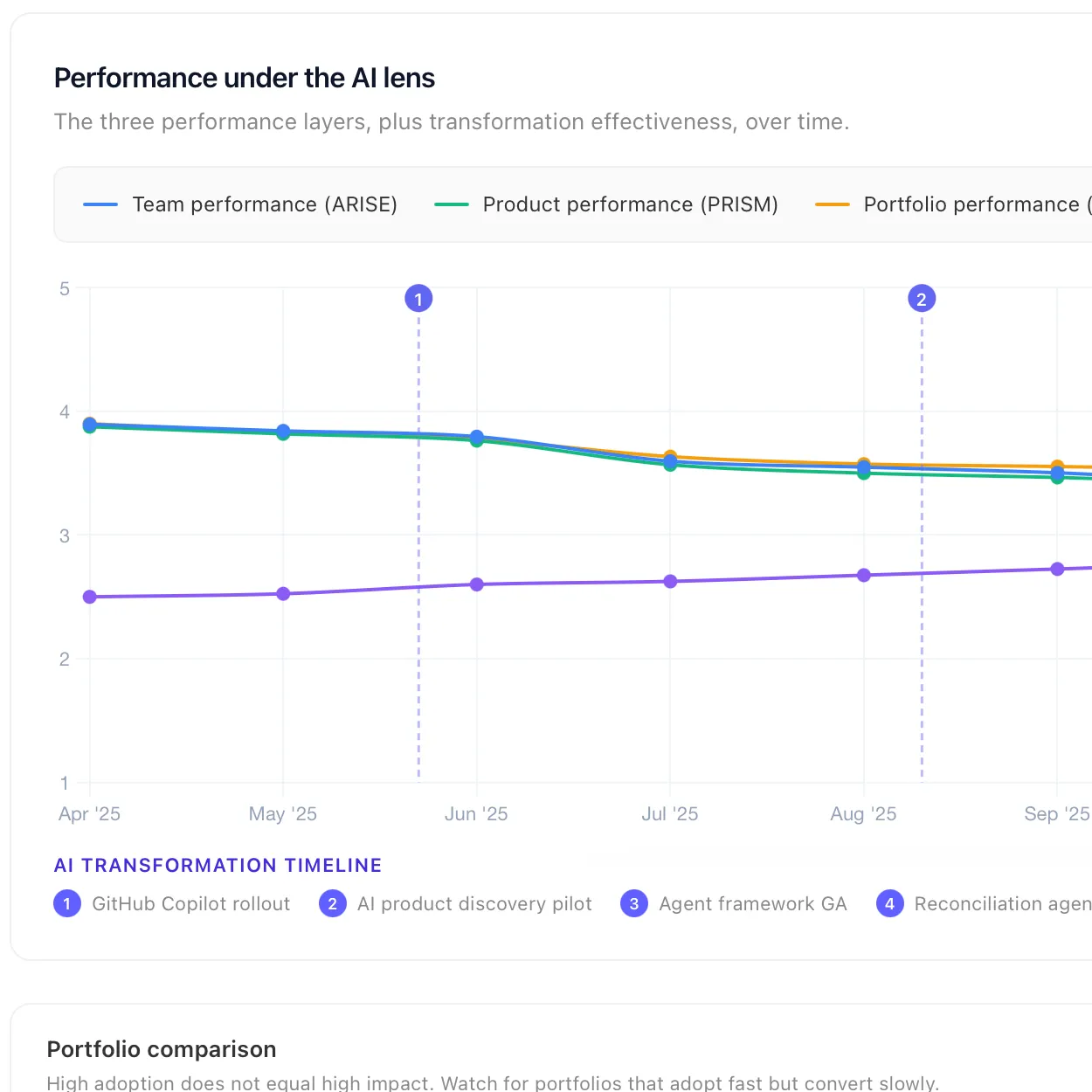
Defend transition spend with evidence instead of a benefits case
Under a regulated revenue cap every grid modernisation and digitalisation bet competes with every other one, and a consultancy benefits case is losing acceptance with both the board and the regulator. Aidrian tracks each initiative against before-and-after performance evidence drawn from your own systems, so funding, continuation and stop decisions rest on what actually changed rather than on what was promised at approval.
Explore use case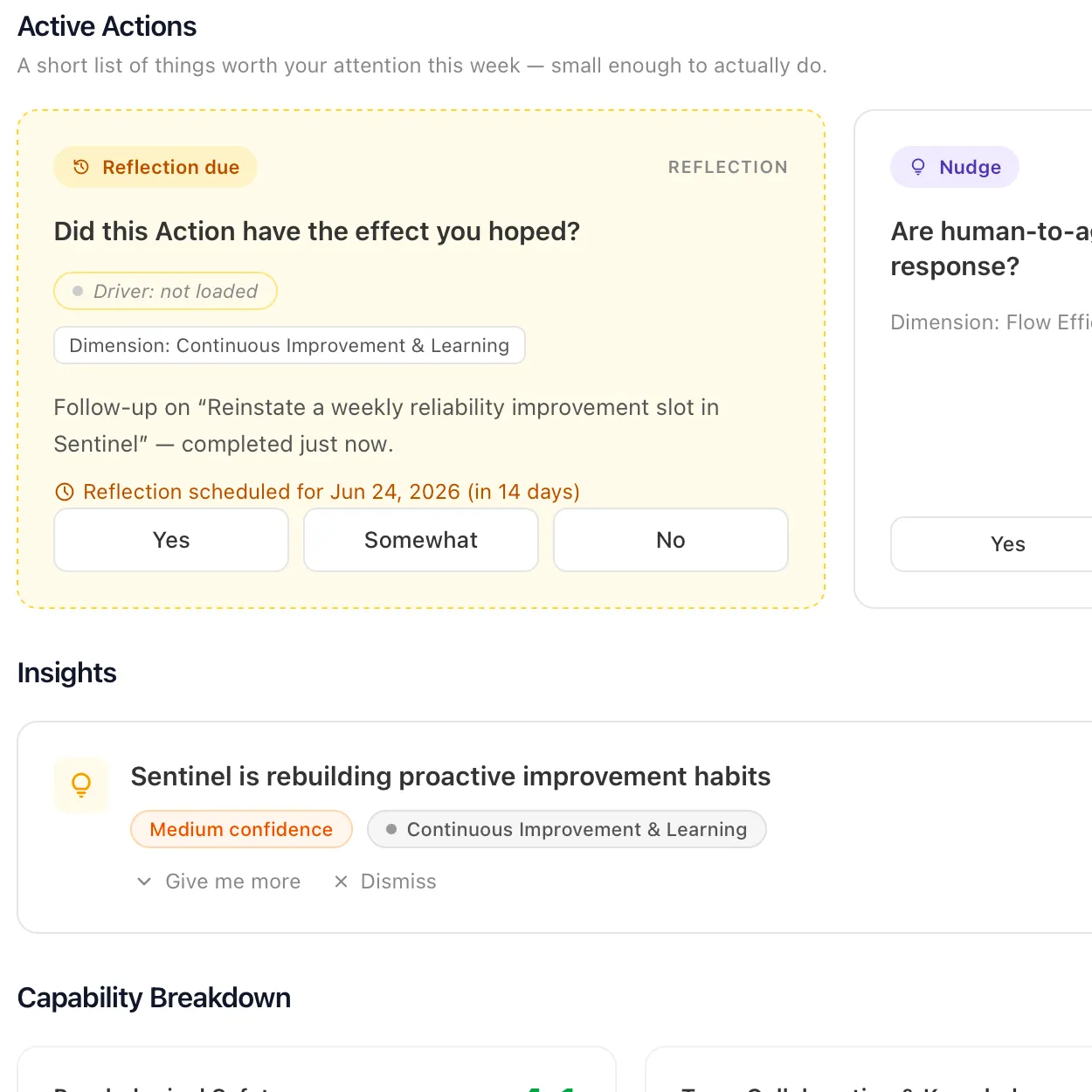
Connect the intervention to the outcome
You simplified the contract, retrained the account teams, rebuilt the customer journey. Three months on, nobody can say which of those moved uptake. Aidrian keeps the loop closed: it surfaces where the problem sits, supports the intervention, then proves whether it worked and links the improvement to the outcome you actually care about, whether that is customers connected, congestion relieved or capacity released.
Explore use case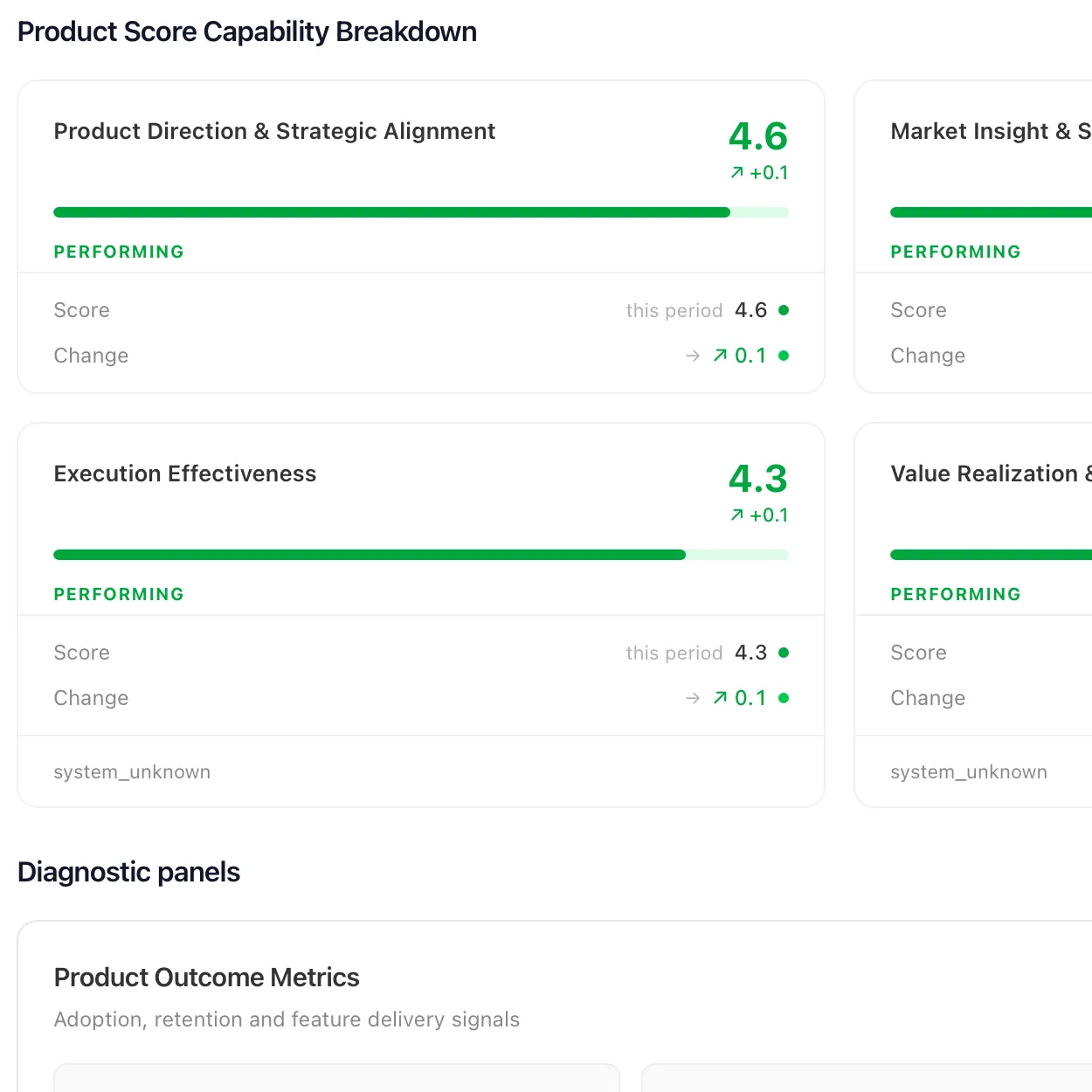
Move faster on the platforms without risking reliability
The market systems, customer platforms and control-adjacent software behind these propositions now sit on regulatory and connection deadlines, and speed usually arrives at the cost of rework and reliability. Aidrian removes friction and unplanned work while measuring every speed claim against quality evidence, so the platform keeps pace with the proposition without trading away the reliability the grid depends on.
Explore use caseBuilt for regulated environments
Data Privacy
GDPR & data residency
DPA available. EU data residency options. Aidrian processes delivery and proposition metadata only. No personal data, no source code, no customer data.
Regulatory
NIS2 & NCCS-aligned
Continuous risk monitoring with time-stamped audit trails, aligned to NIS2 reporting obligations. Evidence exportable in regulator-ready formats to support Network Code on Cybersecurity requirements for cross-border electricity flows.
Procurement
Standard utility vendor onboarding
We've completed vendor risk assessments at multinational grid operators and renewable developers. Pen test results, security questionnaires, and reference architecture available under NDA.
Common questions
We already know our adoption is lagging. What does this add?
Knowing is rarely the problem. Most operators already have the customer insight and the data. What is missing is the capability to convert it continuously into action and learning: seeing where a proposition stalls while there is still time to fix it, making the intervention, and proving whether it worked.
Isn't this just product analytics? We have that.
Product analytics tells you what users did inside one product. Aidrian connects three levels: how each proposition is performing, how the portfolio funding them is steering, and how the teams building them are delivering. That is what lets you tell a proposition problem apart from a delivery problem instead of guessing.
How is this different from the dashboards we already have?
Dashboards show what happened. Aidrian closes the loop: explaining why, guiding what to do next, then proving whether it worked.
Is this HR surveillance?
No. Aidrian measures the system of work, not individuals. It surfaces systemic bottlenecks and team-level patterns, and individual signals are visible only to the person they belong to. It is designed to improve the practitioner experience, not monitor it.
How do you prove the ROI?
The paid pilot runs on three to five real propositions with a deliberate mix of lifecycle stage and adoption problem. It starts on light data with no heavy IT integration, and delivers an installed closed loop plus named interventions with measurable effect. The evidence comes from your propositions, not our claims.
Self-check
Do you have a proposition adoption problem?
Which of these questions would you not feel comfortable answering?
Use cases
Explore all use cases
- hubEnterprise-wide visibilitychevron_right
- speedSpeed without quality riskchevron_right
- crisis_alertCatch systemic risks earlychevron_right
- autorenewEnterprise learning loopchevron_right
- trending_upMake delivery predictablechevron_right
- insightsLeadership enablementchevron_right
- show_chartTransformation ROIchevron_right
- auto_awesomeAI impact, not adoptionchevron_right
- rocket_launchFaster time to marketchevron_right
- directions_runAttrition riskchevron_right
- groupsHeadcount efficiencychevron_right
- savingsSafe cost reductionchevron_right
- flagTrack initiative valuechevron_right
- explorePersonal Growth Compasschevron_right
- starRecognition Feedchevron_right
- local_libraryLearning Habit Builderchevron_right
- forumPeer feedbackchevron_right